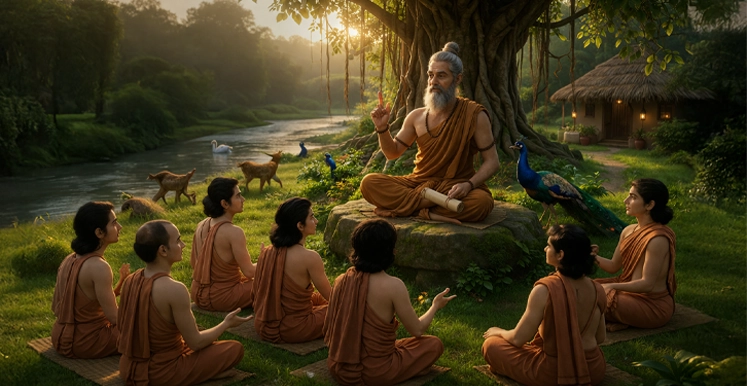
Ayurveda is the oldest science on the earth. Ayu means “life”, Veda means “science”- Ayurveda means “Science of Life”. Ayurveda originated in India 5000 years ago and is called as “mother of all healing”. It is believed that Ayurveda is originated from Lord Brahma and was passed on to his disciple Daksha Prajapathi for maintaining the Universe. Daksha Prajapati conveyed this treatise to the twins Ashvin Kumaras, divine horse-masters who were children of Surya the Sun God. The Ashvins are the Gods of health and medicine, and they passed on the Ayurveda to Indra, the King of Heaven and Chief among Gods. Thus, the divine lineage of Ayurveda on earth was firmly established, and the process of spreading its lessons to an ailing planet finally began and has reached for the goodness of the mankind.
Though the Ayurveda is the ancient science, it is one of the most scientific and advanced science a human being can witness. That is the sole reason why its fundamentals, principles, preventive and curative aspects are still prevalent since ages.
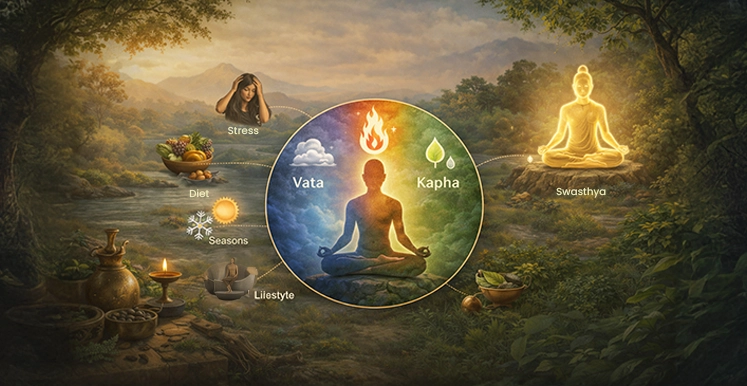
In Ayurveda, every person is born with a unique constitution known as Prakruti, which represents an individual's natural balance of physical, mental, and emotional characteristics. This constitution is formed at conception and remains constant throughout life. Various factors such as stress, diet, seasons, and lifestyle can disturb this balance, leading to disorders or diseases.
Understanding one's Prakruti helps identify the causes of imbalance and guides appropriate corrective actions through personalized food, lifestyle, and treatment choices. This makes Ayurveda unique, as it emphasizes individualized care rather than generalized treatment.
A person is considered truly healthy (Swastya) when the Doshas, Agni (digestive fire), Dhatus (tissues), and Malas (excretions) are in balance, and the mind, senses, and soul are in a pleasant state.
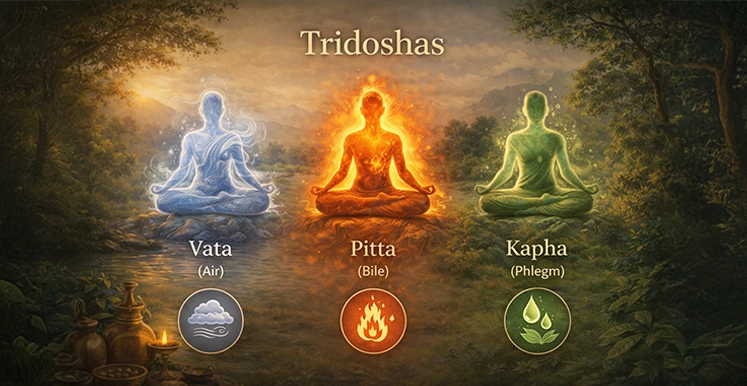
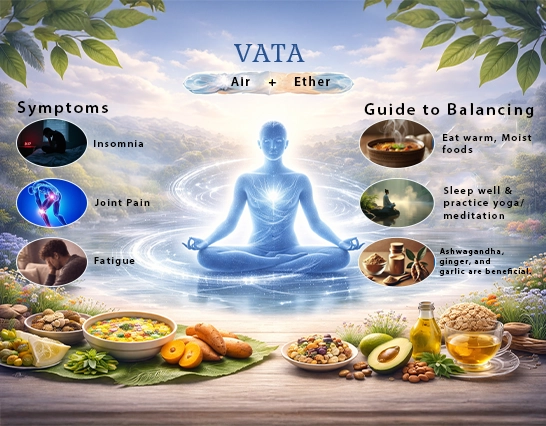
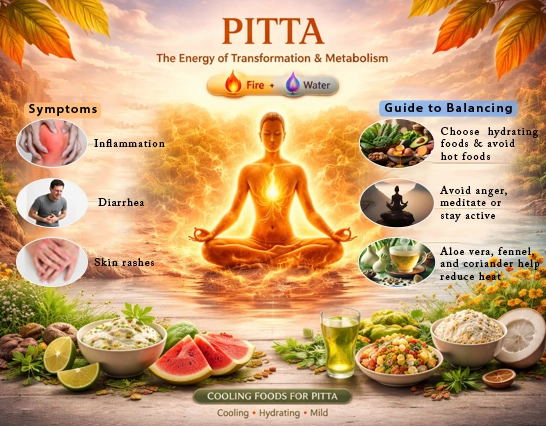
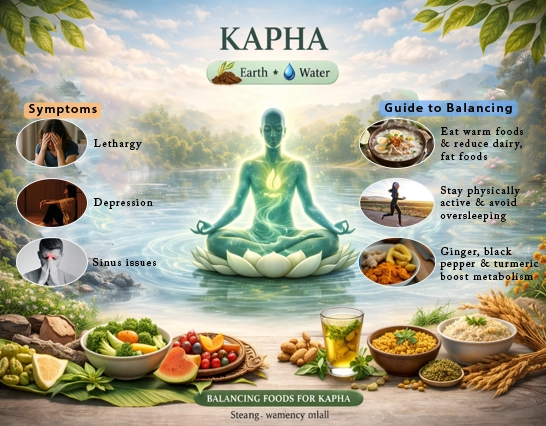
The Tridoshas — Vata, Pitta, and Kapha — are the three fundamental bio-energies that govern all physical and mental processes in the body. Derived from the five elements (Panchamahabhutas), each dosha carries specific qualities and functions that influence health and disease.
Vata (space + air) governs movement and communication. Pitta (fire + water) regulates metabolism and transformation. Kapha (earth + water) provides structure, stability, and lubrication.
When the doshas are in balance, the body maintains harmony. Imbalance, triggered by lifestyle, diet, or environmental factors, initiates the disease process. Ayurvedic treatment always aims to restore doshic equilibrium.
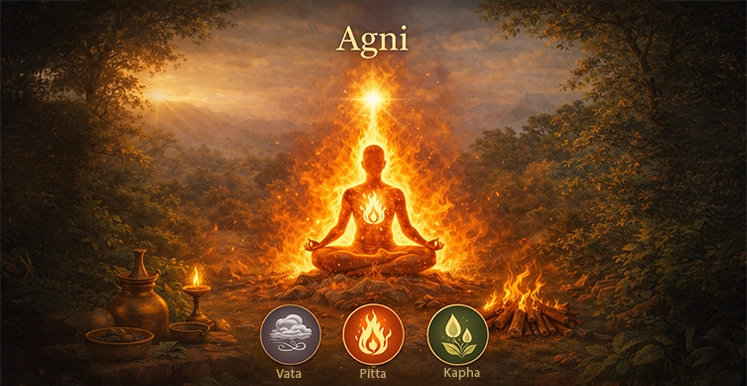
Agni, or digestive fire, is the cornerstone of health in Ayurveda. It governs the digestion, absorption, and assimilation of food, as well as the metabolism of sensory and mental impressions. Strong Agni produces vitality, clarity, and immunity; weak or aggravated Agni leads to the accumulation of Ama (toxins).
There are thirteen types of Agni in the body — Jatharagni (central digestive fire), seven Dhatvagnis (tissue fires), and five Bhutagnis (elemental fires). Jatharagni is considered the most important, as it governs all others.
Maintaining balanced Agni through mindful eating, proper food combinations, and appropriate lifestyle habits is central to Ayurvedic preventive care.
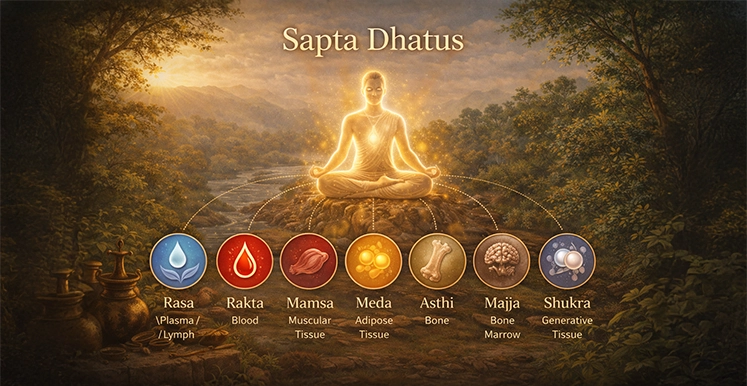
The Saptadhatus are the seven bodily tissues that form the structural foundation of the human body. In sequential order they are: Rasa (plasma), Rakta (blood), Mamsa (muscle), Meda (fat), Asthi (bone), Majja (marrow/nerve), and Shukra/Artava (reproductive tissue).
Each Dhatu is nourished sequentially — nutrients pass through each tissue layer, and the quality of one directly influences the next. The final essence of all Dhatus is Ojas, the vital essence responsible for immunity, vitality, and radiance.
Ayurvedic treatments often target specific Dhatus to restore balance and rebuild strength from within, using diet, herbs, and therapies appropriate to the affected tissue.
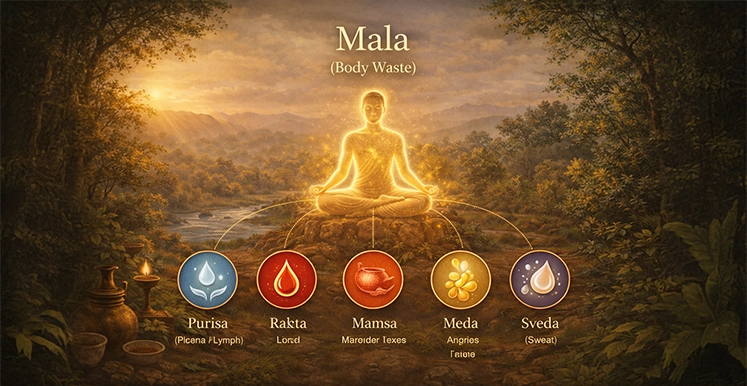
Malas are the waste products of metabolism. The three primary Malas are Purisha (feces), Mutra (urine), and Sweda (sweat). Though considered waste, they perform important physiological roles while still in the body and their proper elimination is essential for maintaining health.
Beyond the primary three, secondary Malas are produced by the Dhatus — for example, mucus from Rasa, bile from Rakta, and ear wax from Majja. Imbalanced Malas indicate underlying doshic disturbance.
Proper elimination of Malas is a key indicator of digestive health in Ayurveda. Retention or excessive elimination of any Mala can disturb the Doshas and lead to systemic imbalance over time.

According to Ayurveda, the universe is made of five primordial elements, namely earth, air, fire, water and ether. These elements themselves are inanimate, but in combination, give rise to three main biological forces or principles in the human body, called doshas – , and, as every human being has a different balance of elements, one dosha is typically predominant in our constitution and ascertains our personality.
When the five eternal substances – space, air, fire, water and earth combine to form the human body, they do so by creating three vital energies, or doshas. These are the forces that govern all psycho-physiological functions in the body and mind respectively. They construct the body and serve to maintain it in a dynamic state of health. However, when these vital forces are aggravated, due to improper gross or subtle factors, the body- mind connection begins to suffer and the disease process begins.



AyurBay follows the ancient principles of Ayurveda — “The Science of Life” — which emphasizes prevention, balance, and rejuvenation. We integrate Dinacharya (daily routines), Ritucharya (seasonal practices), and Panchakarma (detoxification therapies) to help our guests achieve lasting wellbeing. We don’t just treat symptoms. we focus on understanding the root cause of imbalance and guiding you toward a healthier way of living.

Each guest’s journey begins with: Prakriti Analysis & Doctor Consultation – Understanding your unique constitution and imbalances. Personalized Healing Plan – Ayurvedic treatments, herbal diet, and yoga suited to your needs. Therapeutic Routine – Daily yoga, herbal meals, detox therapies, and meditation practices. Sustainable Wellness Guidance – Lifestyle and dietary recommendations for continued balance after your stay.

BAMS · AyurBay Wellness Centre
Dr. Satya Sai and his team ensure that every guest receives care rooted in authenticity, empathy, and results-driven healing. With over 8 years of experience in Ayurvedic medicine, he leads AyurBay's healing programs with deep expertise and compassion.
A graduate of S.V. Ayurvedic Medical College, Tirupati, he is certified in Keraliya Classical Panchakarma, Viddha Karma (pain management), and Yoga & Treatment Modalities from Patanjali, Haridwar.